Technology
Built, tested and ready to adapt.
Our technology has been developed through real educational deployments. Each component can serve a specific need or become part of a larger learning system.
- Partner programmes and approved resources
- Luma Content Factory and education intelligence layer
- Messaging, web applications and offline delivery
- Learners, teachers, parents and programme teams
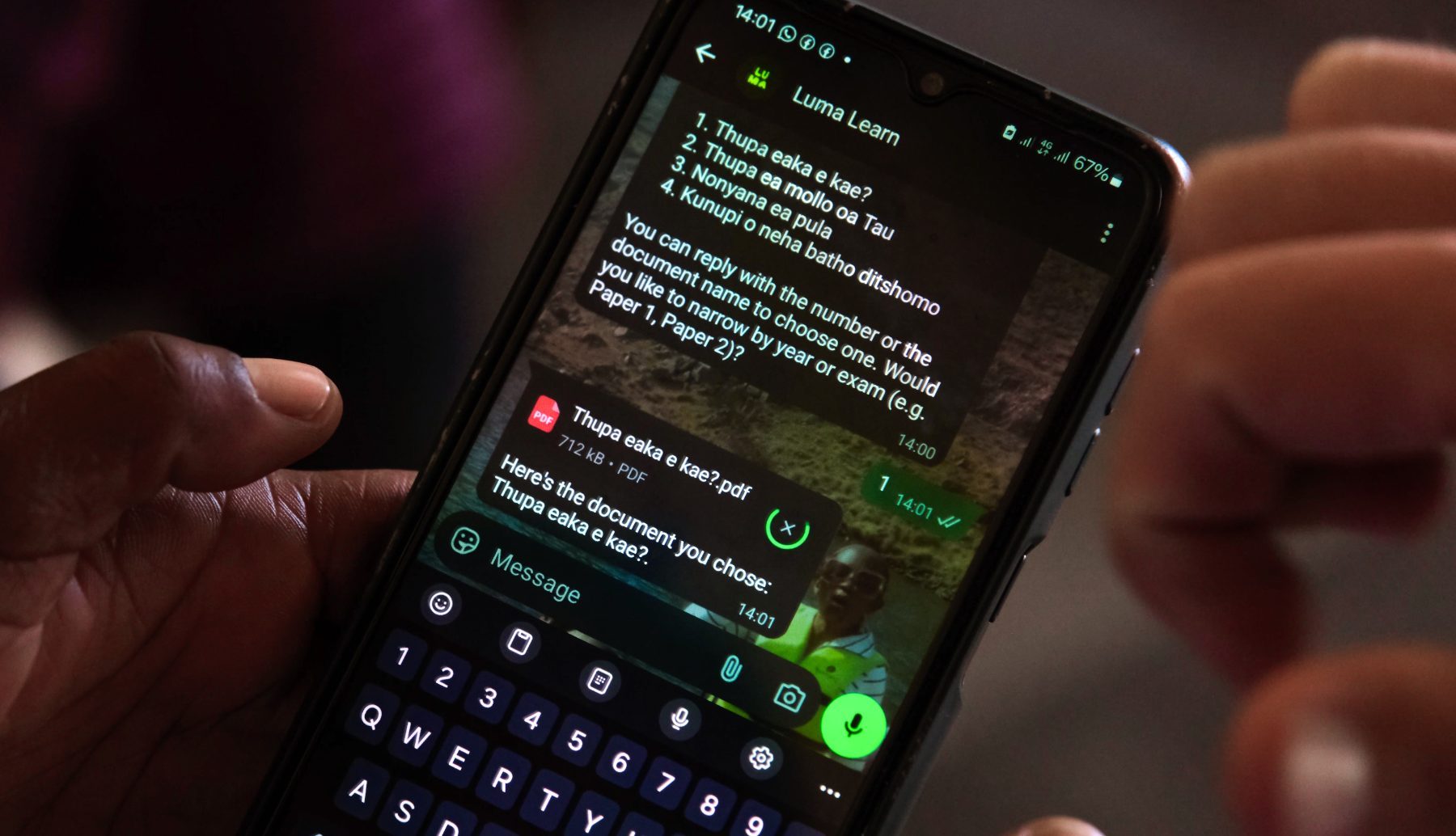
Learning through the channels people already use.
WhatsApp and Facebook Messenger experiences that deliver education on familiar, low-data channels. Each can be branded and configured for an individual organisation.
- Curriculum-based tutoring
- Lesson support
- Content distribution
- Assessments
- Reminders
- Programme communication
Luma Skills uses these channels to train frontline teams for companies →
Mobile-first, without the complexity.
Web applications that load quickly on modest phones and connections, for learners, teachers and the teams who run programmes.
- Learner portals
- Digital learning pathways
- Assessment experiences
- Teaching resources
- Administrator interfaces
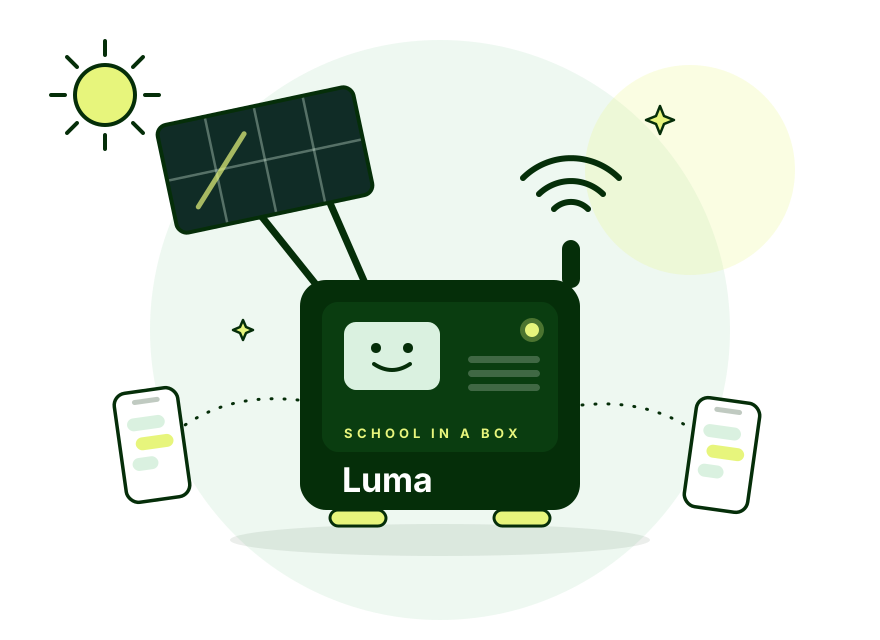
Learning infrastructure that doesn't wait for a signal.
A locally deployed education system for schools and communities with unreliable connectivity. It serves content and AI support on site, and synchronises when internet access becomes available.
- Local deployment
- Runs on a local server inside the school or centre.
- Offline access
- Nearby devices connect over local Wi-Fi.
- Local AI
- Learning support from models running on the device.
- Periodic updates
- New content and improvements sync when a connection is available.
From trusted resources to digital learning.
A system for converting existing educational material into structured resources that work across channels. Human review sits at the centre: nothing reaches learners without approval from the people responsible for the content.
- 01
Educational content
Lesson plans, teacher guides, past papers, readers.
- 02
Structured learning resources
Quizzes, assessments, pathways and translations.
- 03
Review and approval
Your subject experts check and sign off.
- 04
Delivery across platforms
Messaging, web and offline from one source.
Not a generic chatbot inside a learning app.
Our education intelligence layer works from approved instructional and curriculum resources. It retrieves from those sources, follows structured learning pathways and is evaluated against educational expectations.
No AI system is free of error. Safeguards, evaluation and content boundaries reduce the risk of inappropriate or off-curriculum responses, and we keep improving them with use.
AI that runs where the learning happens.
We are developing AI capabilities that run on compatible phones, computers and local servers. Keeping processing on the device matters where connectivity is limited and where data should stay local.
G · Integration and reporting
Separate components. One system.
The products share configuration, content and reporting, so a programme can combine channels without running separate platforms.
- Programme and curriculum configurationSet up grades, subjects, pathways and programme rules.
- Existing content and system integrationConnect libraries, content stores and existing tools.
- Learning engagement reportingSee how beneficiaries use the programme.
- Role-based accessDifferent views for learners, teachers and administrators.
- Language and localisationContent and interfaces in local languages.
- Deployment monitoringTrack the health of online and offline deployments.
- Privacy-conscious data handlingCollect only what the programme needs.